Industrial, ag & transportation
Equipment frames, conveyor and material-handling structures, trailer and chassis assemblies — built to ramp from prototypes to full production runs.

US-based precision manufacturing
CENCAL CNC is a family-owned, ISO 9001:2015-certified machining and fabrication shop. Turning, milling, Swiss, fabrication, and flat- and tube-laser cutting under one roof — serving agriculture, manufacturing, transportation, medical, electronics, energy, and data centers, prototype to production.
 ISO 9001:2015 certified · Family-owned · Kingsburg, CA
Capabilities
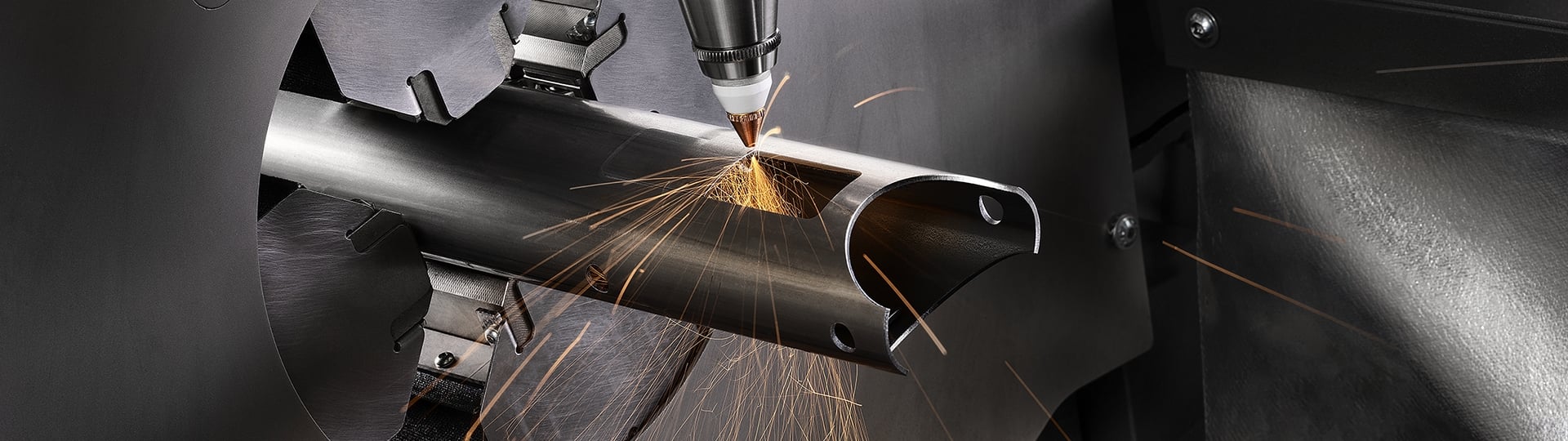
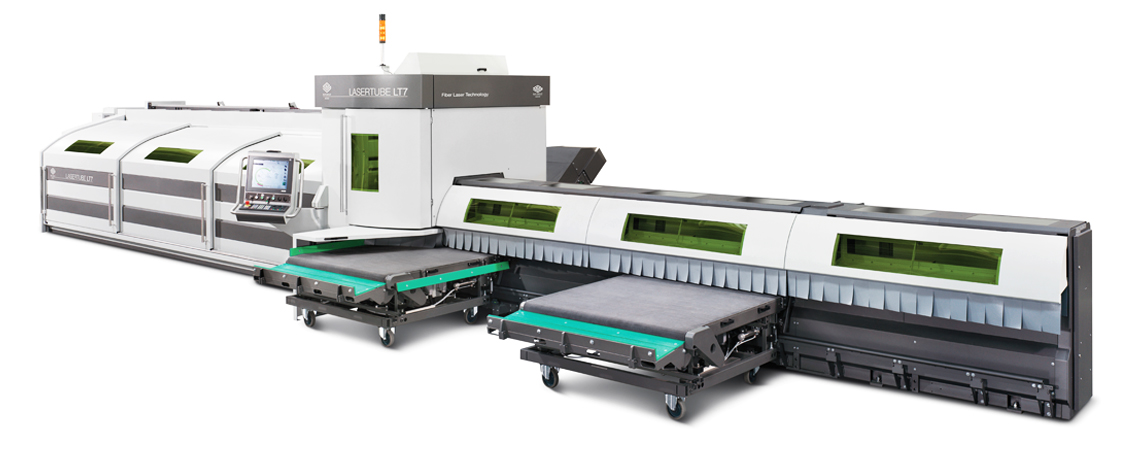
A BLM Group fiber laser that cuts, copes, bevels, and marks tube in one automated pass.
Capabilities · Cutting
Flat sheet or tube and profile — the part decides the machine, and we run both in-house.
A 30kW Bystronic ByCut Star on a 72×144″ bed, cutting to 2″ depending on the alloy, plus two Mazak Optiplex 3015 lasers (6kW and 10kW) on 60×120″ beds to 1″ — with a 20-shelf automated material tower for lights-out sheet running.
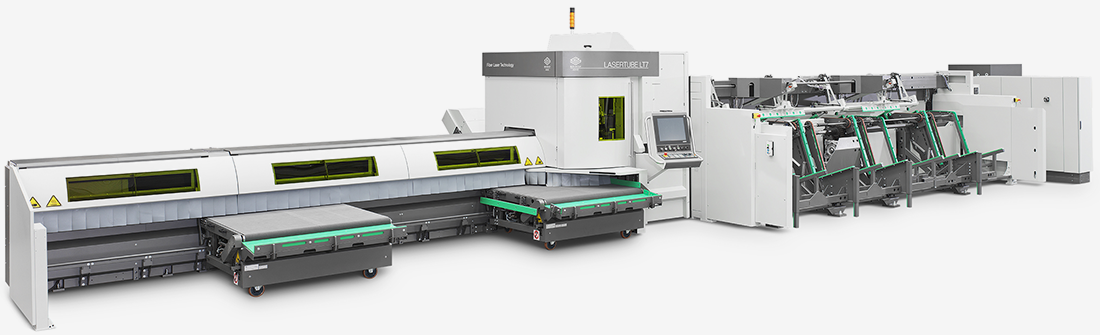
BLM LASERTUBE LT7, 5kW — round to 6″, square and rectangular to 8.5″ diagonal, plus angle, channel, and flat bar. Cuts, copes, bevels, and marks in one pass. Detail below.
Capabilities · Fiber laser tube cutting
Our BLM Group LASERTUBE LT7 turns raw, mill-length tube into finished, ready-to-weld parts in a single automated pass — cutting, coping, beveling, and marking in one operation, machined right here in California.
What a tube laser actually does
Conventional tube fabrication is a relay race: saw to length, deburr, drill, mill the notches, grind the copes, miter the ends, punch the holes, then prep every joint for weld. Each handoff is another setup, another fixture, another chance to drift out of tolerance — and another part sitting in a queue waiting for the next machine.
The LT7 collapses that entire relay into one pass. A fiber laser follows a 3D path around the tube and cuts every feature the part needs — length, copes, bevels, holes, marks — straight from the CAD file. Stock goes in raw; parts come out finished and ready to weld, untouched by hand in between.
It replaces, in one operation
How it works
No tooling to build, no fixtures to set, no parts shuttling between stations. Four steps, one queue, lights-out capable.
Full mill-length bars — round, square, or structural — load automatically from a bundle. No cut-to-length saw step, no manual handling between operations.
Parts come straight from your CAD model. No tooling, no fixtures, no dies to build. Software nests every part along the bar to squeeze the most out of each stick of material.
A fiber laser on a 3D head cuts the whole part in one pass — length, copes, weld bevels, holes, slots, louvers, and laser-etched marks — following the tube around all four faces.
Finished, repeatable, ready-to-weld parts come off the far end while the next bar feeds in. Lights-out capable, so the machine keeps running after the shop goes home.
What a saw can't do
A cold saw cuts length. A tube laser cuts intent — the joints, bevels, and alignment features that decide how fast a weldment goes together and how well it holds.
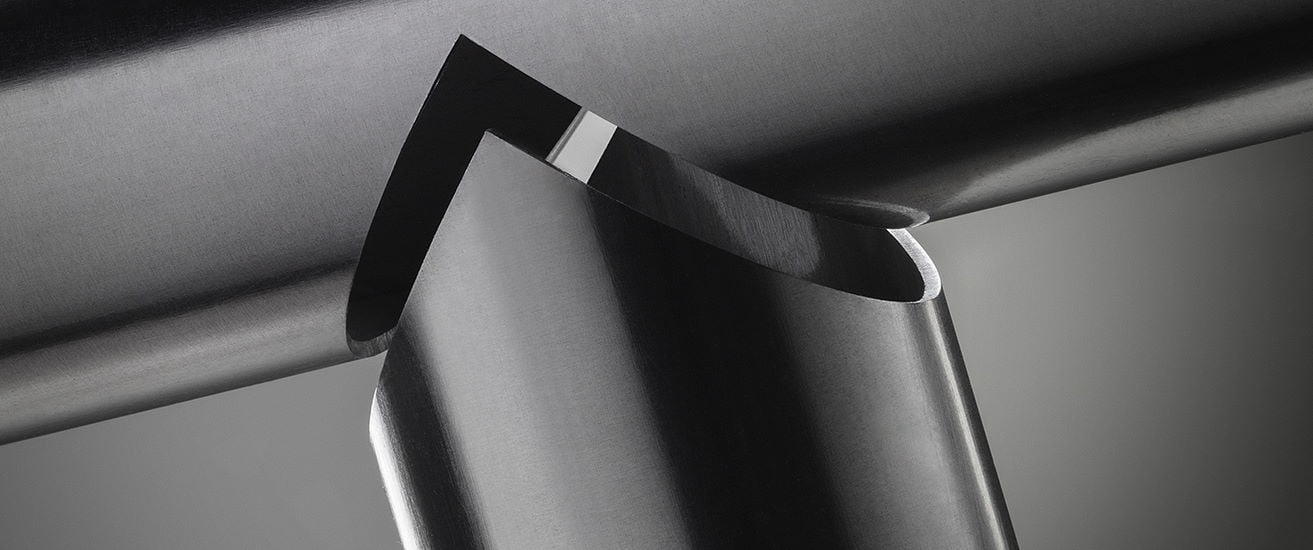
Bevels and chamfers cut straight into the tube end so weld joints reach full penetration with zero hand-prep — stronger welds, no grinder, no setup.
Tube-to-tube intersections cut to a perfect fit — the coped saddles a frame needs, with none of the grind-and-check fit-up that eats fabrication hours.
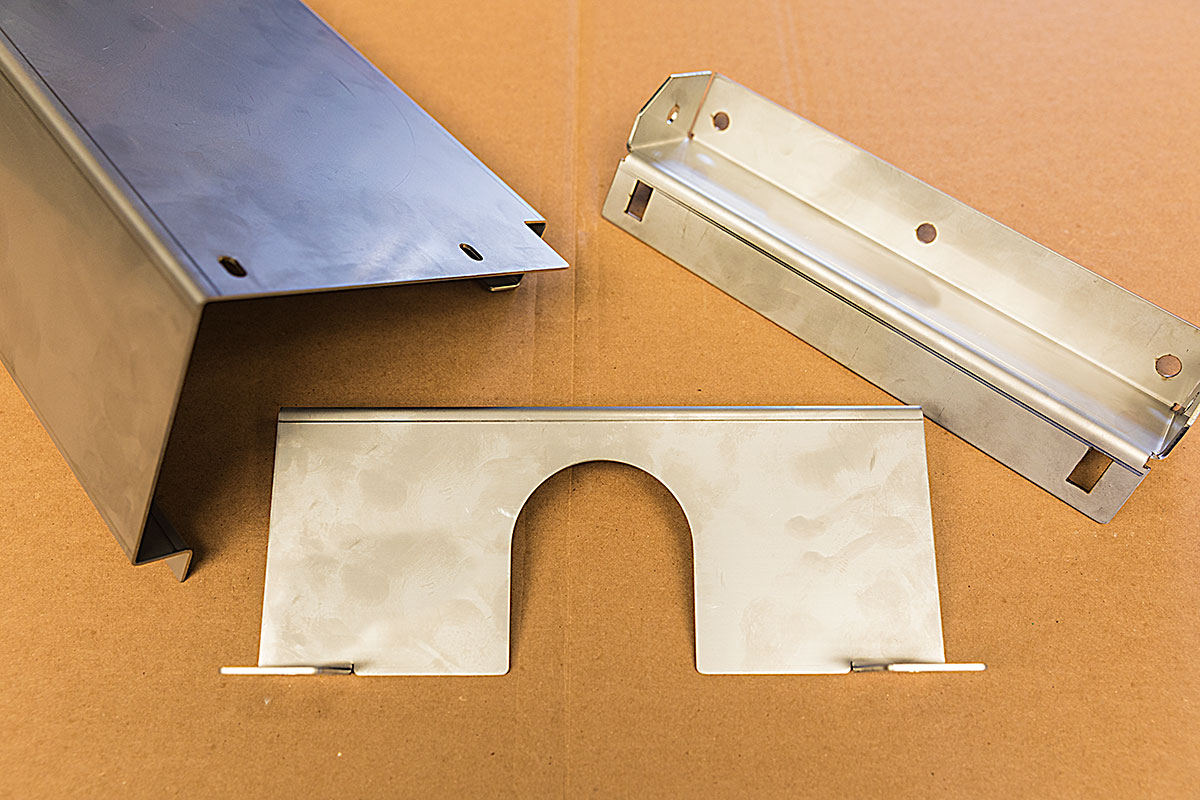
Interlocking tabs and slots let weldments self-locate and snap together like a kit — slashing fixturing, cutting weld time, and making every unit identical.
Part numbers, bend lines, weld locations, and logos etched right into the metal for full traceability and error-proof assembly downstream.
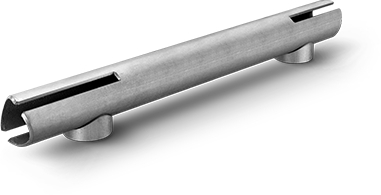
Slots, coped ends, mounting holes, weld-relief, and alignment tabs — all lased into a single part with nothing left for a second machine. Fewer operations means fewer ways for a part to come out wrong.
What it cuts · Materials
The structural workhorse — frames, racks, brackets, and weldments where strength and cost matter most.
Food, architectural, and corrosion-critical work. Clean, oxide-free cuts with no cross-contamination.
Lightweight frames, enclosures, and transportation structures where weight is the enemy.
Busbars, power, and thermal hardware. The fiber source cuts reflective copper that older CO₂ lasers can't touch.
Fittings, fluid hardware, and electrical components needing clean edges and tight features.
What it cuts · Profiles
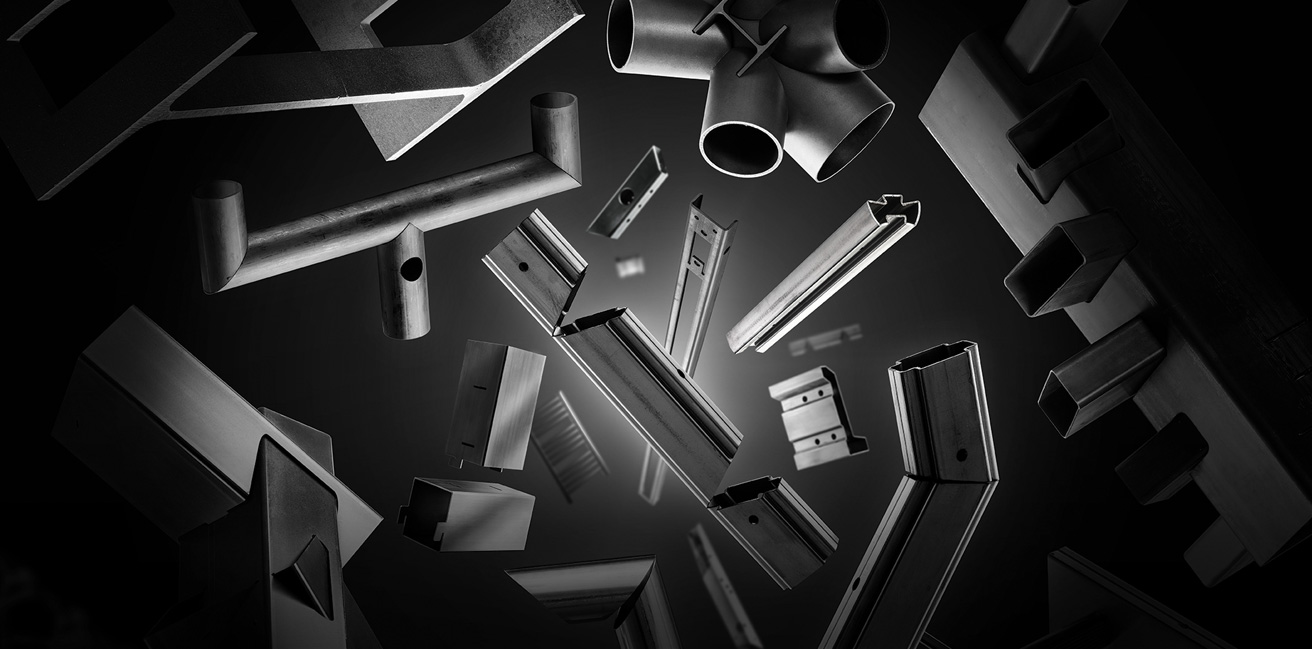
Tube and structural shapes alike, including open sections like angle and channel that a conventional line struggles to fixture. If it comes in a bar, the laser can cut copes, bevels, holes, and joints into all of it.
The difference
What we build with it
Equipment frames, conveyor and material-handling structures, trailer and chassis assemblies — built to ramp from prototypes to full production runs.
Frames, handrails, canopies, stairs, and trusses where clean welds and repeatable fit-up matter as much as the cut itself.
Rack and enclosure frames, busbar supports, cable-management structures, and immersion-tank framing.
Quality
The laser holds a ±0.004″ class cut on every part, and because the whole job is made in one setup, tolerance doesn't stack up the way it does across a conventional line. Critical features are verified on a Mitutoyo CMM certified to 0.0002" and a Keyence vision measuring system, and laser marking gives every part a traceable identity — all under our ISO 9001:2015 system.
Questions, answered
Yes — three flat-sheet fiber lasers. A 30kW Bystronic ByCut Star takes 72″ × 144″ sheet and cuts to 2″ depending on the alloy, and two Mazak Optiplex 3015 machines at 6kW and 10kW run 60″ × 120″ sheet to 1″ in mild steel, stainless, and aluminum. A 20-shelf automated material tower feeds the Mazaks, so sheet work can run lights-out. Tube and flat are separate machines here, not one machine doing double duty.
Round tube up to about 6 inches in diameter — or 8.5 inches across the diagonal for square and rectangular sections — plus channel, angle, and open structural shapes. Not sure your profile fits? Send the print and we'll confirm the exact envelope for your part.
Carbon and mild steel, stainless steel, aluminum, copper, and brass. The fiber source handles reflective metals like copper and brass that hold many shops back.
Both. Because the laser works straight from a CAD file with no tooling or fixtures, a one-off prototype and a 10,000-piece run start from the same program — so we can ramp without re-engineering the part.
A saw cuts length. A punch makes holes. The LT7 does length, copes, bevels, holes, slots, and marks in a single setup, on all four faces of the tube — features a saw-and-drill line physically can't produce in one operation.
The laser holds a ±0.004″ class cut, and because the whole part is made on one machine, tolerance doesn't stack up across setups the way it does on a conventional line. Critical features are verified on our CMM and Keyence vision system.
Collapsing eight conventional operations into one pass is exactly what shortens lead times. Share quantity and material with your print and we'll commit to a date — no waiting weeks for out-of-state tube-laser capacity.
Industries
We started making parts for Central Valley agriculture and grew into a shop serving manufacturers across California and beyond — same equipment, same quality system, different prints.
Finished parts leave Kingsburg on our own trucks — we control the last leg, so the delivery date is one we can commit to.
Share material, quantity, and target lead time. CAD files (STEP/IGES) are encouraged — they speed up quoting and improve accuracy.